An air conditioner makes water every hour it runs. A drain line carries that water away, and when the line clogs, the pan overflows and the water goes into the ceiling, the wall or the floor. If you see water at an indoor unit, shut the system off at the thermostat and call (301) 936-0619.
How Air Conditioners Release Water Indoors
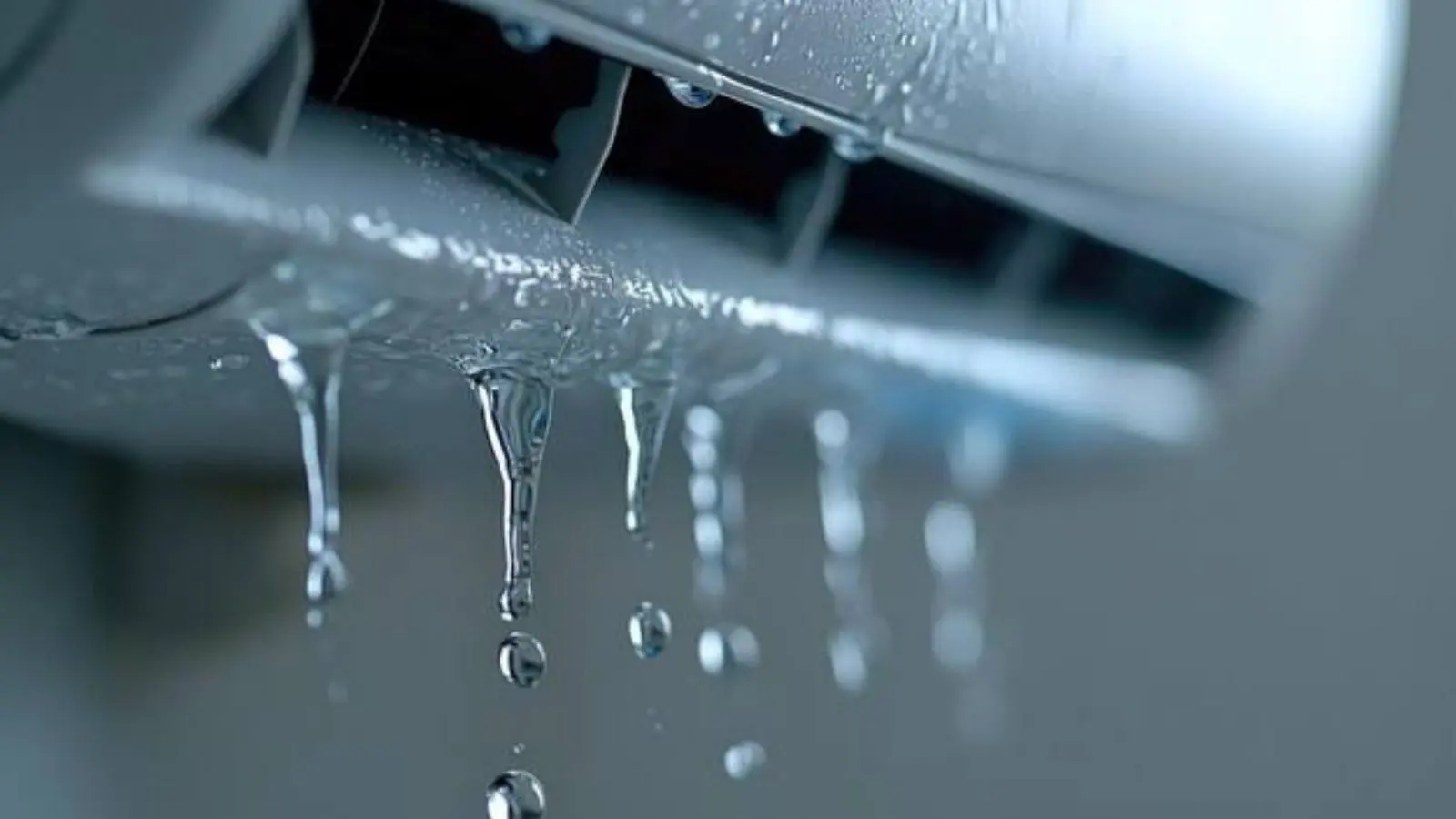
Cooling air removes moisture, which collects on the evaporator coil and drips into a pan. The condensate line then runs to a drain or to the outside. Algae and dust build up in that line over a season, and the pan fills and spills. A float switch can stop the system before that happens, but older systems may not have one.
The EPA's moisture guide advises keeping air conditioning drip pans clean and drain lines unobstructed and flowing properly. It also says condensation can be a sign of high humidity, which is worth remembering after a humid mid-Atlantic summer.
Where The Water Ends Up
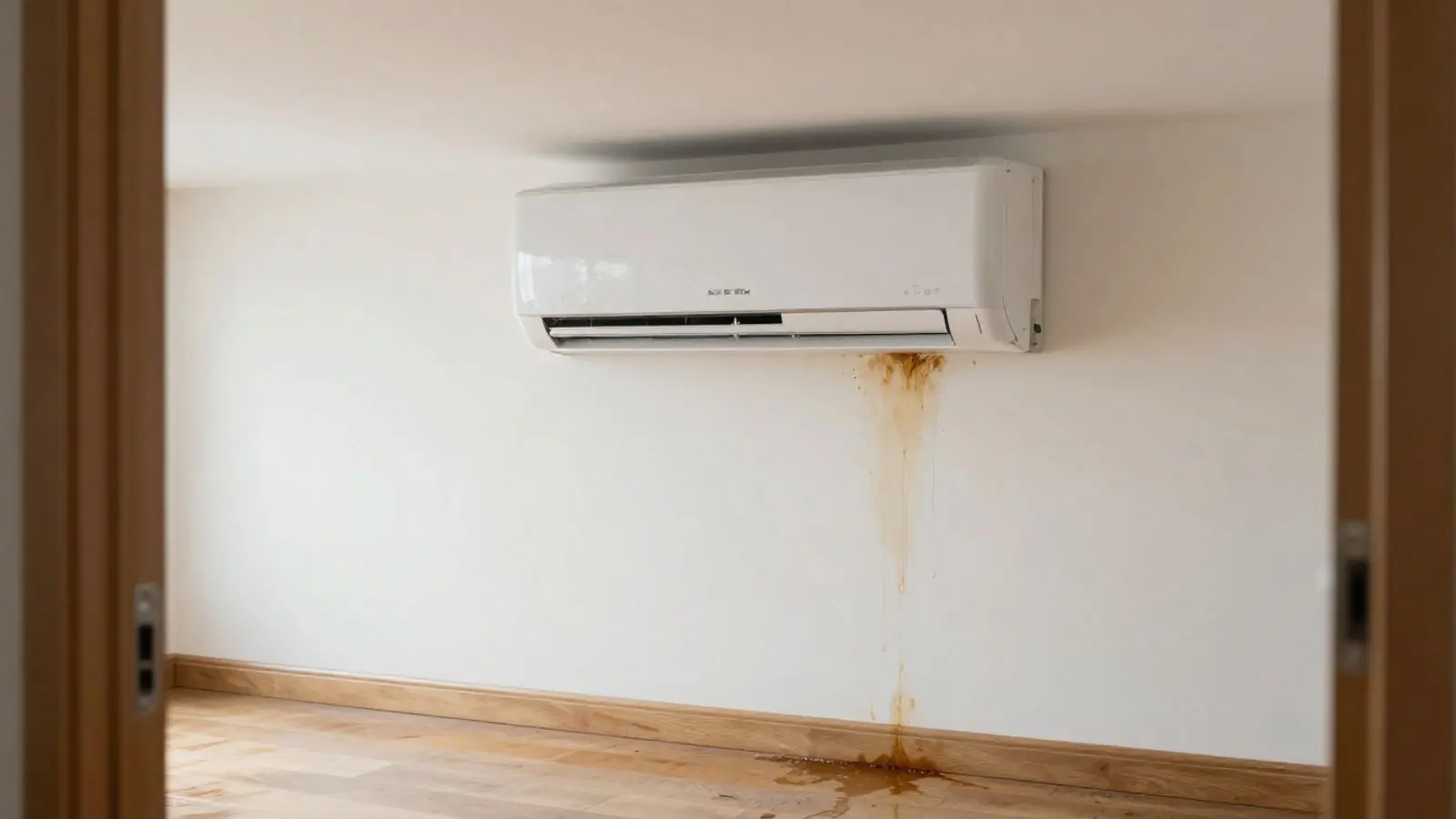
Air handlers sit in attics, closets, hallways and above ceilings, so the overflow often shows up as a ceiling stain or a dripping light fixture. Ductless wall units can leak along the wall behind them, leaving a rusty or yellow streak. Window units drip onto the sill, the wall below and the floor.
The Maryland State Data Center's 2020 Census tables count 3,683 housing units in the Temple Hills census-designated place, with 213 of them vacant. A vacant unit with a cooling system running or a thermostat left on can leak for weeks before anyone looks.
Ceiling stained below the air handler?
Turn the system off, then call (301) 936-0619 to dry the ceiling and attic insulation.
Reading The Signs
| Sign | What it usually means | What to do |
|---|---|---|
| Brown or yellow ring on a ceiling under the unit | Drain pan has overflowed repeatedly | Switch off cooling and call |
| Water on the floor under a closet unit | Clogged condensate line or a cracked pan | Switch off cooling and dry the area |
| Rust-colored stain down the wall below a ductless unit | Drain tube is dripping inside the wall face | Have the unit serviced |
| Ice on the coil or vents | Airflow problem that melts into a leak | Turn off cooling until it thaws |
Safety Steps When The Unit Is Wet
Air conditioner leak safety
Turn the cooling off at the thermostat, then at the breaker if water is near the unit. Do not touch a wet air handler or its wiring. If a ceiling sags with water, keep clear of it, because wet drywall can drop.
Place a bucket under a drip if you can do so safely, and move belongings away. Do not poke a hole in the ceiling to release water unless a professional advises you to.
Water coming from the AC?
Call (301) 936-0619. Tell the dispatcher where the unit sits and which ceiling or wall is wet.
How We Dry And Repair The Damage
The crew extracts standing water and checks the ceiling, wall and floor with moisture meters and a thermal camera. Wet insulation is removed, and drywall is cut out where it has softened or stained.
Air movers and dehumidifiers dry the cavity. Once readings are normal, the repair stage replaces drywall, tapes and primes it, and matches paint. We use the ANSI/IICRC S500 water damage restoration standard as a reference for the drying steps.
An HVAC technician clears the drain line and fixes the cause. We coordinate so the ceiling is not closed while the source remains. Larger repairs to a stained ceiling or wall are covered in water damage repair.
Drain line clogged and overflowing?
Call (301) 936-0619 once the pan is overflowing and the drywall is wet.
AC leak repairs run from a single stained panel to a damp attic floor. These factors set the range.
- Leak history. A single overflow differs from a summer of drips.
- Material. Drywall, plaster and acoustic ceilings repair differently.
- Insulation. Wet attic insulation is removed and replaced.
- Access. Attic and tight closet units take more time to work around.
- Finish work. Texture and paint matching add to repair time.
Call (301) 936-0619 and the scope and price for an AC leak job are laid out before anyone starts.
Insurance Fit For Condensate Damage
Insurers often distinguish between a sudden overflow and repeated leaking from poor maintenance, and the policy wording decides which applies. Keep records of service visits and take photos of the damage. We document the affected area and what was removed, and your insurer makes the coverage decision.
Prevention And Common Mistakes
- Have the condensate drain and pan checked before the cooling season begins.
- Ask a technician about a float switch that shuts the system off when the pan fills.
- Do not keep running a unit that is dripping.
- Do not paint over a ceiling stain before the cavity is confirmed dry.
We repair AC water damage in Clinton and Oxon Hill too, and our other ceiling and wall work is described under wall and drywall water damage repair.
Common Questions
Is emergency AC leak water damage repair available in Temple Hills?
Calls are answered at all hours, and a crew can reach a wet ceiling the same day when one is open. Turn the system off at the thermostat first, because running it adds more water.
Can I just clear the drain line myself?
A technician can do that safely, and we leave the system repair to HVAC professionals. Our work is the water extraction, drying and repair of the wet areas.
Will the ceiling stain go away once the leak stops?
Not by itself. The stain is a mark on drywall that has absorbed water. Repair means drying the area, replacing damaged drywall if needed and priming before paint.
Can an AC leak cause mold?
It can if the area stays damp. The EPA says wet areas dried within 24 to 48 hours usually do not grow mold, so quick drying is important.