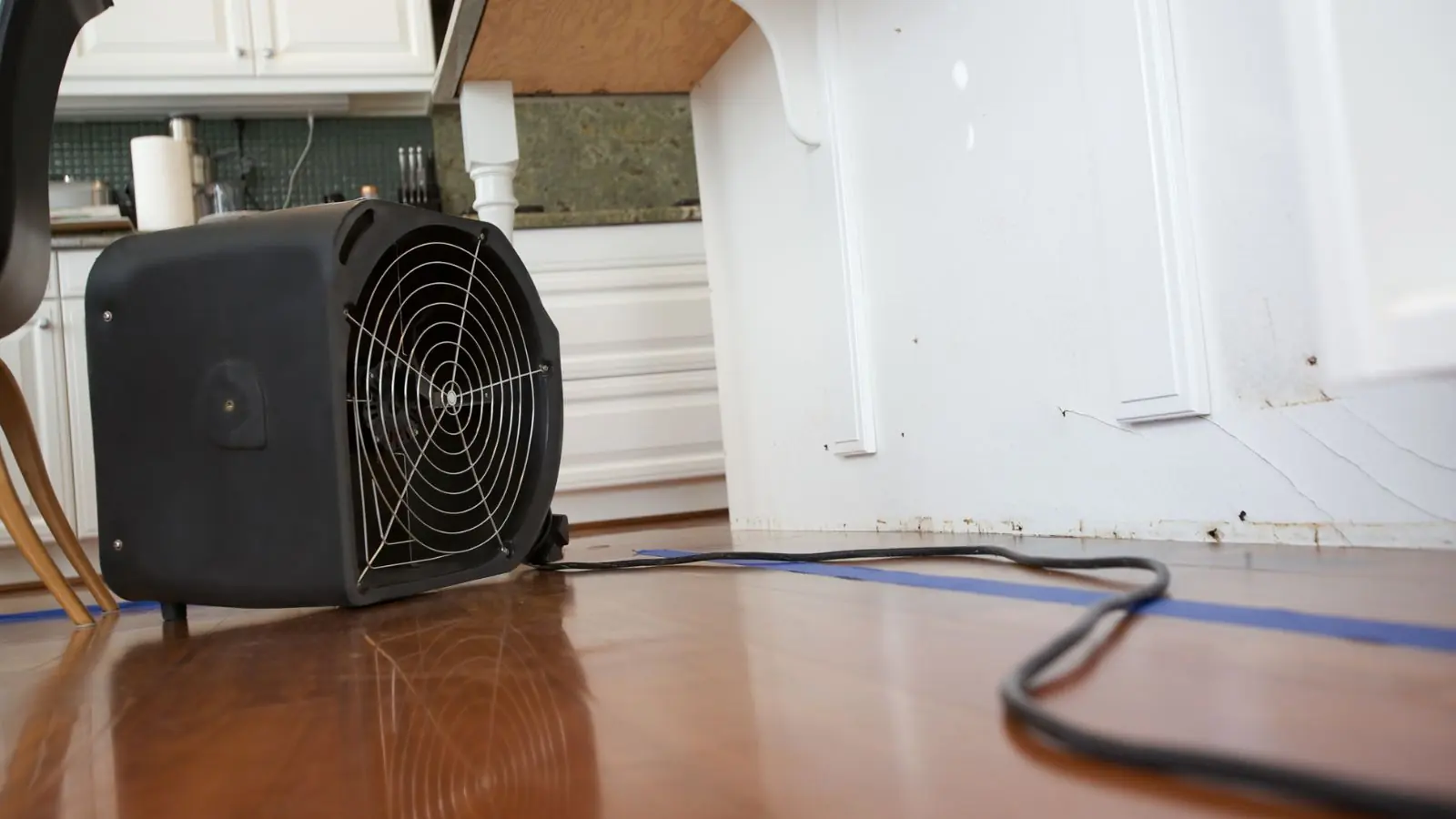
Water in a kitchen touches many materials at once. Cabinet boxes, toe-kicks, countertops, backsplash, subfloor and the floor surface each hold water differently. If your kitchen is wet right now, call (301) 936-0619. The line is answered 24/7.
Where Kitchen Water Comes From
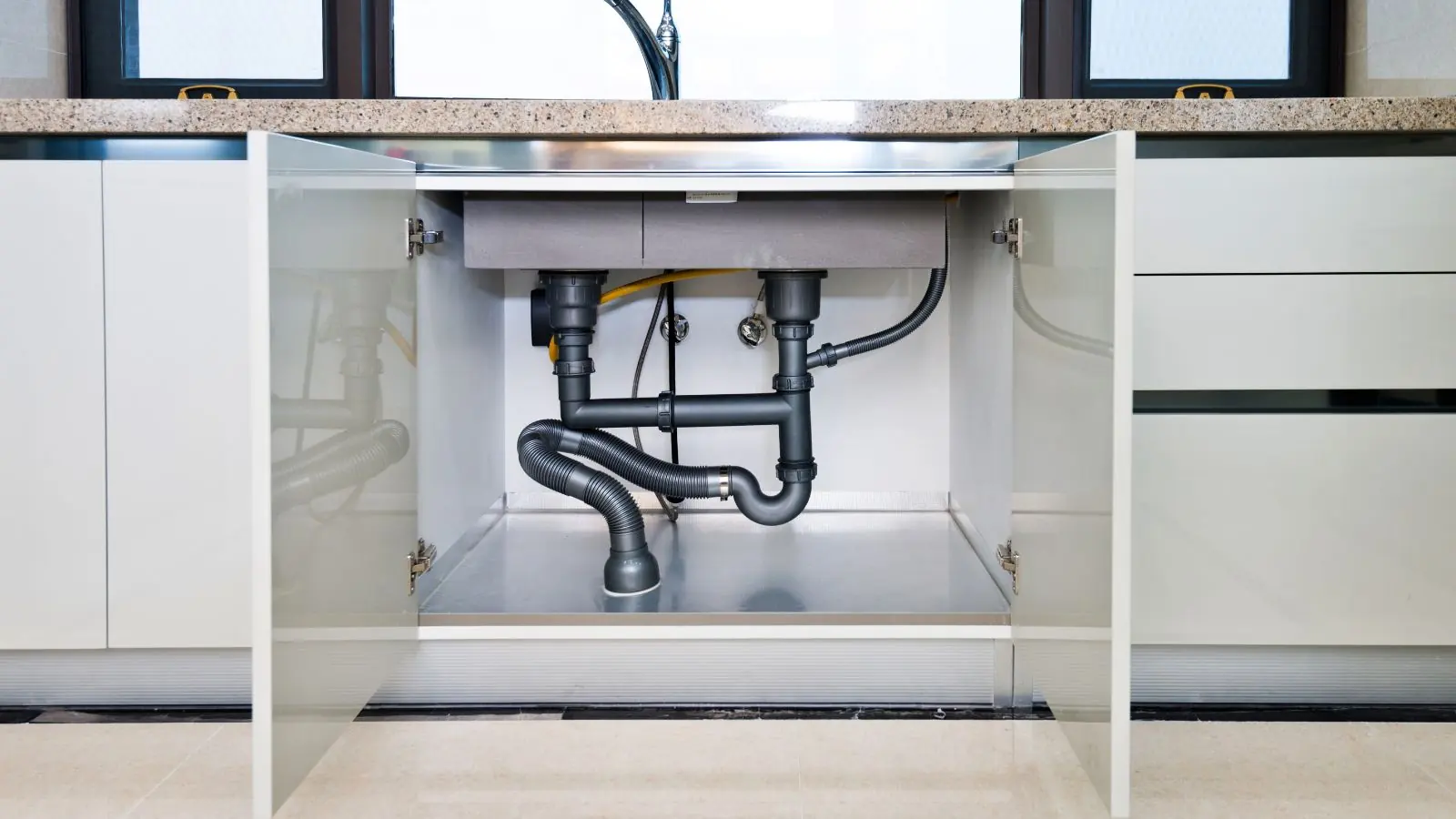
The usual sources are the sink supply and drain, the dishwasher connection, a refrigerator water line and a leaking faucet or disposal. Slow leaks under the sink are common because the cabinet floor hides them. Larger events come from a failed supply hose or a pot filler line.
Because the sink base cabinet is a closed box, water collects there and wicks into the particleboard sides. A cabinet that looks dry at the door may be soaked at the back and bottom.
Older Kitchens And Newer Fixes
Housing in the Temple Hills area dates from many eras, and housing near Oxon Hill and Suitland, according to Census Bureau history, was built between the 1940s and the early 1990s. Kitchens of that age often have older supply stops and rigid pipes that have not been touched in decades.
Prince George's County's plumbing permit page says replacing existing fixtures generally does not require a permit, with water heaters and backflow devices as exceptions. For anything beyond a fixture swap, ask your plumber what is needed.
Cabinets swelling or floor cupping?
Call (301) 936-0619 and describe what sits under the sink and dishwasher.
What Each Layer Tells You
Cabinet bases
Swelling at the bottom edge or a loose toe-kick means water reached the particleboard.
Countertop and backsplash
Lifting laminate or stained caulk points to water from above or behind.
Flooring
Cupping, buckling or lifting seams show water below the surface.
Walls
Paint bubbles or soft drywall behind appliances signal moisture in the cavity.
First-Hour Kitchen Safety
Kitchen water safety
Close the supply valve under the sink or the appliance valve, or the main if you cannot find them. Keep power off to outlets near the wet floor and do not use the oven or dishwasher until an electrician or a qualified technician checks them.
Empty the sink base and the wet cabinet and set aside food and dishes that touched water. Take photos of every layer before you wipe anything.
Kitchen floor wet?
Call (301) 936-0619 and tell the dispatcher where the water started.
How We Dry A Wet Kitchen
Extraction comes first. The crew removes toe-kicks and checks cabinet bases, drilling small drying holes in a base only when it is the practical option. Wet insulation and drywall behind cabinets are cut out where needed.
Dehumidifiers and air movers run with directed airflow into cabinet bases, and drying mats can pull moisture from a hardwood or engineered floor. The EPA advises drying water-damaged areas within 24 to 48 hours to prevent mold growth, and we plan the work around that window. The ANSI/IICRC S500 standard guides our drying steps as a reference.
If an appliance caused the leak, see appliance leak water damage for how we trace and dry that source.
Leak behind the dishwasher?
Water travels under cabinets and into subfloor. Call (301) 936-0619 for a moisture check.
A wet kitchen can mean a damp toe-kick or a full gut. The cost depends on these factors.
- Cabinet material. Particleboard swells and often needs replacement, while solid wood dries better.
- Flooring type. Tile, vinyl, laminate and hardwood differ in what can be saved.
- Water duration. A long slow leak reaches farther than a one-time spill.
- Countertops. Removing countertops to dry cabinets adds work.
- Rebuild scope. Cabinet and flooring replacement is separate from drying.
Call (301) 936-0619 and the scope and price for kitchen drying are explained ahead of the work.
Insurance Fit For A Kitchen Loss
Sudden leaks from plumbing or appliances are often treated differently from long-term seepage, and the policy wording decides. We provide photos, readings and a list of materials removed. Your insurer decides coverage, and a flooring or cabinet contractor handles the rebuild estimate.
Prevention And Mistakes To Avoid
- Look under the sink once a month with a flashlight.
- Replace aging supply hoses before they fail.
- Do not seal a wet cabinet base with caulk or paint.
- Do not install new flooring over a subfloor that has not been dried.
We dry kitchens in Oxon Hill and Clinton too, and for floors that lift see water damage repair.
Common Questions
Is emergency kitchen water damage service available in Temple Hills?
The line never closes, and a crew can come to a wet kitchen the same day when one is available. Close the supply valve and keep power off near the wet floor while you wait.
Can wet kitchen cabinets be saved?
Solid wood often can, with prompt drying. Particleboard that has swelled usually cannot be restored. We check each cabinet before recommending removal.
Do you replace countertops and flooring?
We handle extraction, drying and removal of unsalvageable materials. A flooring or cabinet contractor handles the rebuild, and our scope notes help them price it.
Why check behind the dishwasher?
Dishwasher leaks often run along the subfloor and into the cabinet base, so the surface may look dry while materials behind and below are wet.