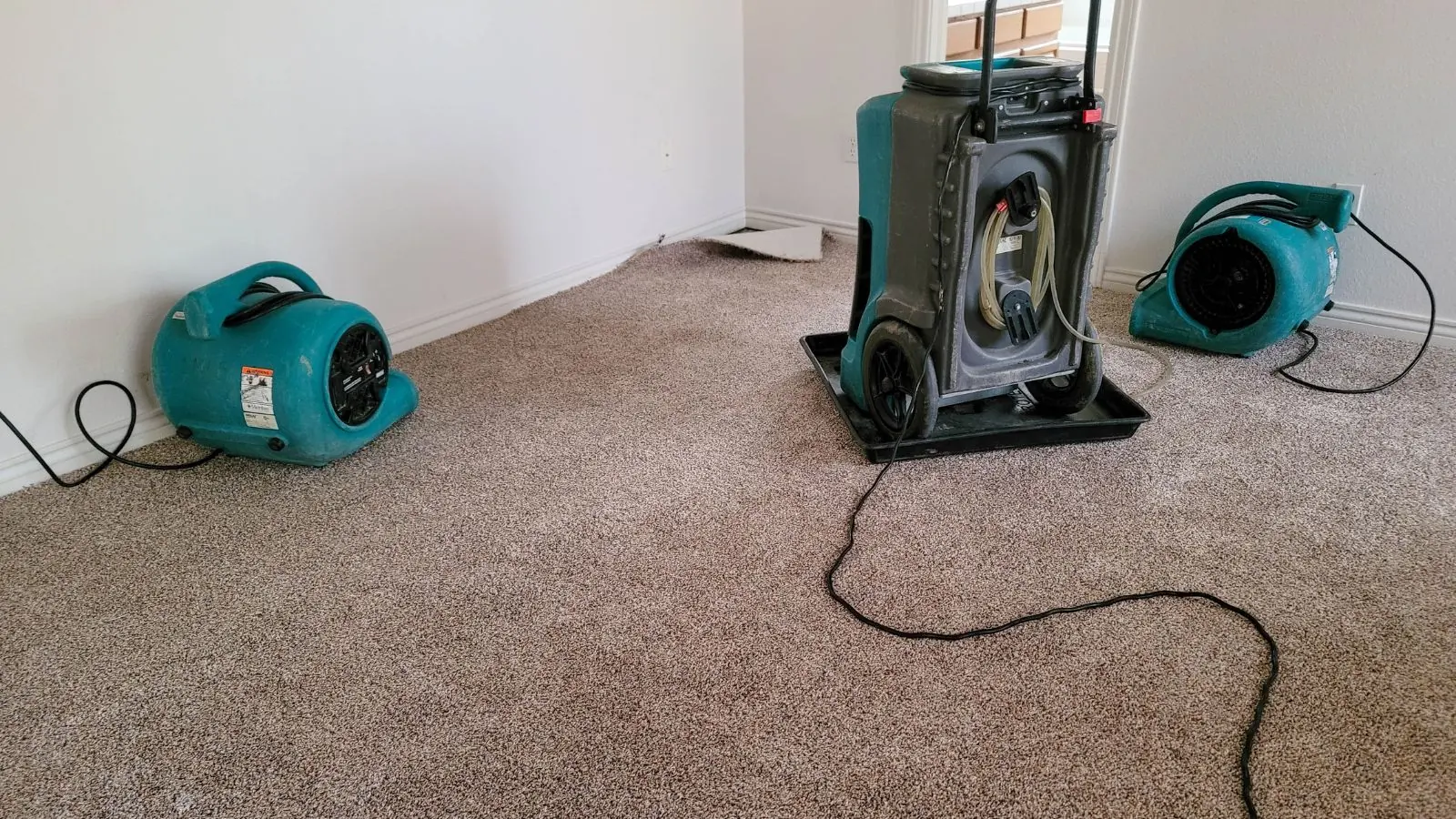
Structural drying is the planned removal of water from a building's materials after the standing water is gone. It uses equipment, measurements and a record of readings. A dry surface is not proof of a dry structure, so we check. If your property has been wet, call (301) 936-0619. The line is answered 24/7.
What Drying Means In Practice
Water moves into wood, drywall, concrete and insulation, and it leaves slowly. Drying speeds that by moving air across wet surfaces and pulling the moisture out of the air with dehumidifiers. The aim is to return materials to their normal moisture level.
This differs from water mitigation, which covers the broader emergency response. Here the focus is the equipment and the measurements.
Why Measurement Comes First
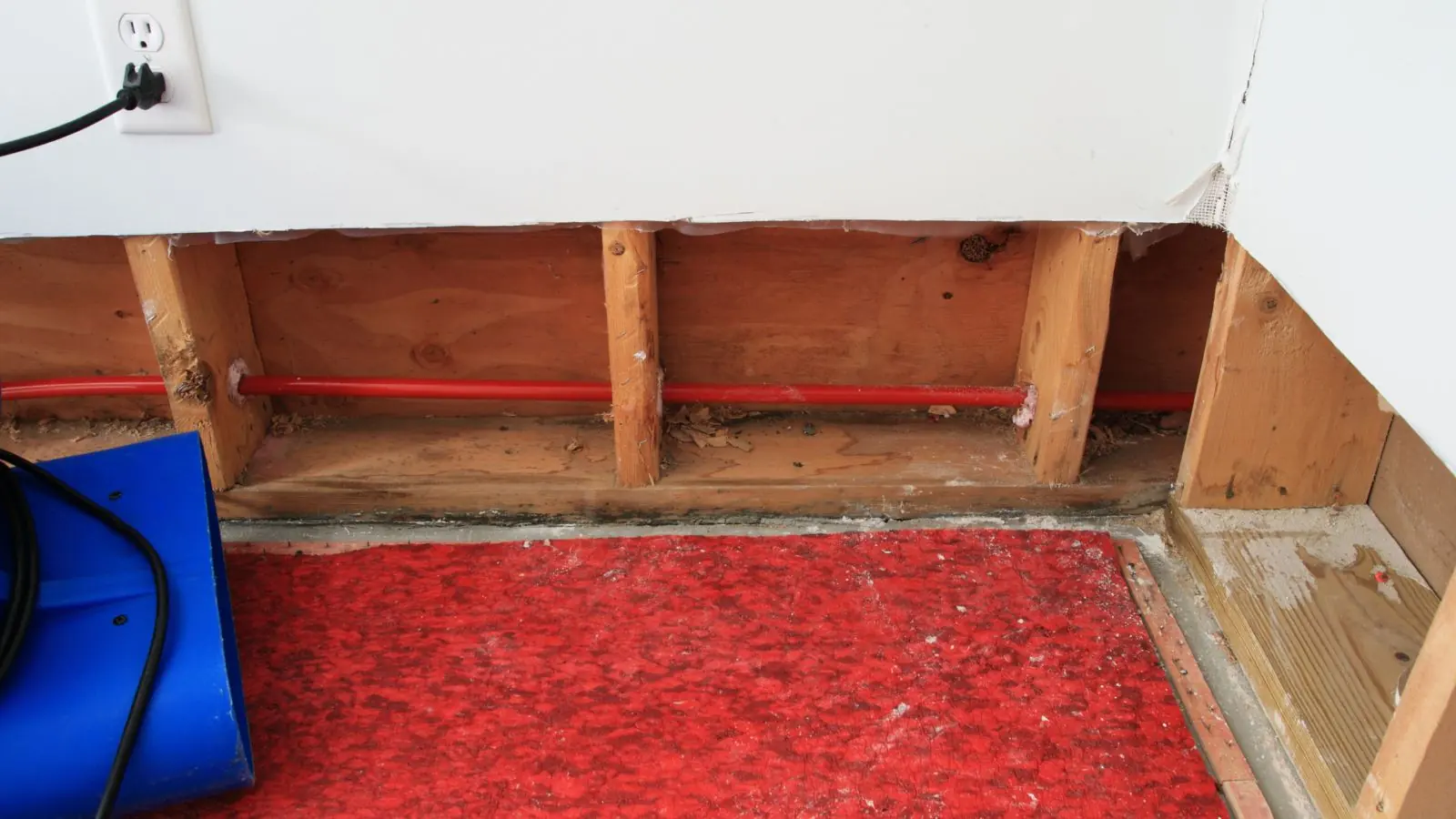
The EPA's moisture guide advises drying water-damaged areas within 24 to 48 hours to prevent mold growth. Meeting that window means knowing where the water is, not guessing. Moisture meters read wood and drywall, and a thermal camera shows cool, damp areas that the eye misses.
Prince George's County's flood management page says about 4,000 structures are flood prone in a 100-year storm, mostly in older, dense communities. In wet years, more homes have damp lower levels than a visual check would show.
Floors dry on top but damp below?
Call (301) 936-0619 to ask about moisture mapping and drying equipment.
| Equipment | What it does | Where it is used |
|---|---|---|
| Air movers | Push air across wet surfaces to speed evaporation | Floors, wall bases, ceilings |
| Low-grain dehumidifiers | Remove moisture from the air so materials keep releasing it | Whole rooms and sealed spaces |
| Drying mats and injectors | Pull moisture from hardwood or wall cavities | Floors and wall cavities |
| Moisture meters and thermal camera | Find and track wet material | Everywhere, daily |
Safety Steps Around Drying Equipment
Drying equipment safety
Keep children and pets away from running equipment and cords. Do not move or unplug a unit without asking us, and do not cover a dehumidifier. Plug equipment into circuits that are dry and rated for the load.
If a breaker trips, tell us rather than resetting it repeatedly. Keep doors and windows closed in the drying area so the dehumidifiers work on the wet space, not outside air.
Wet inside the walls?
Call (301) 936-0619 and tell the dispatcher what got wet and how long ago.
Day By Day: What To Expect
On the first day the crew extracts water, maps moisture and sets equipment. A drying plan lists how many air movers and dehumidifiers fit the space and the wet materials. On later days the crew returns, checks readings in the same spots and adjusts the equipment.
Drying usually takes several days, and thick concrete or hardwood may take longer. The job ends when readings reach the target for each material, and the crew removes equipment. We use the ANSI/IICRC S500 water damage restoration standard as a reference for the plan.
Related work on basements is covered under basement water damage cleanup.
Equipment already running at home?
Call (301) 936-0619 if readings have not been checked since the first day.
Drying cost depends on the size of the wet area and how long the materials hold water.
- Square footage. More wet area means more equipment.
- Materials. Concrete, hardwood and plaster dry slowly.
- Drying days. Longer jobs run more equipment time.
- Water category. Contaminated water adds cleaning before drying.
- Monitoring. Daily visits and readings are part of the plan.
Call (301) 936-0619 to talk through a drying plan, scope and price before equipment is set.
Drying Records And Insurance
Daily readings and photographs create a record your insurer may ask for. We keep that record and share it with you. Coverage depends on the cause and the policy, and your insurer decides it.
Mistakes To Avoid
- Turning equipment off early because the surface feels dry.
- Opening windows in humid weather and letting damp air back in.
- Closing walls before readings reach the target.
- Running one household fan and expecting the same result.
Our drying crews work in Oxon Hill and Clinton as well as Temple Hills.
Common Questions
Is emergency structural drying available in Temple Hills?
The line is open all day and night, and a drying crew can set equipment the same day when one is free. Keep the area closed and do not open windows if it is humid out.
How long does structural drying take?
Often several days. Thick or dense materials take longer, and readings decide when it ends.
Why are dehumidifiers used with fans?
Fans move wet air around. Dehumidifiers remove the moisture from it, which keeps materials drying.
Can I rent equipment and dry it myself?
You can, but without a moisture meter you cannot tell when it is done. We use readings to confirm.