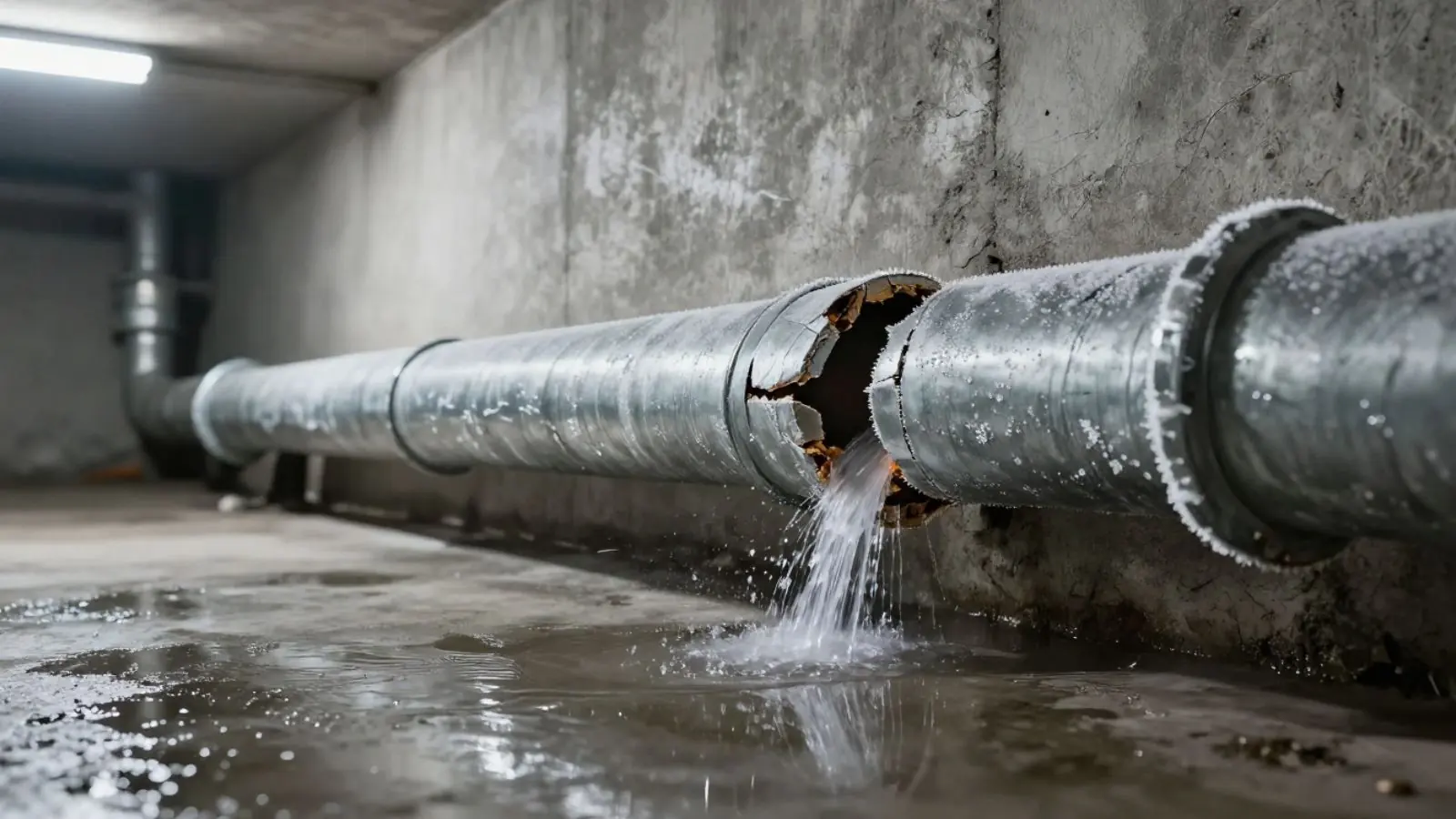
A frozen pipe does not usually flood a house while it is frozen. The ice plugs the line and the split hides behind it. Water pours out when the temperature climbs and the plug melts, often while nobody is home. If you hear running water behind a wall after a cold night, call (301) 936-0619. The line is answered 24/7.
How A Cold Night Becomes A Wet House
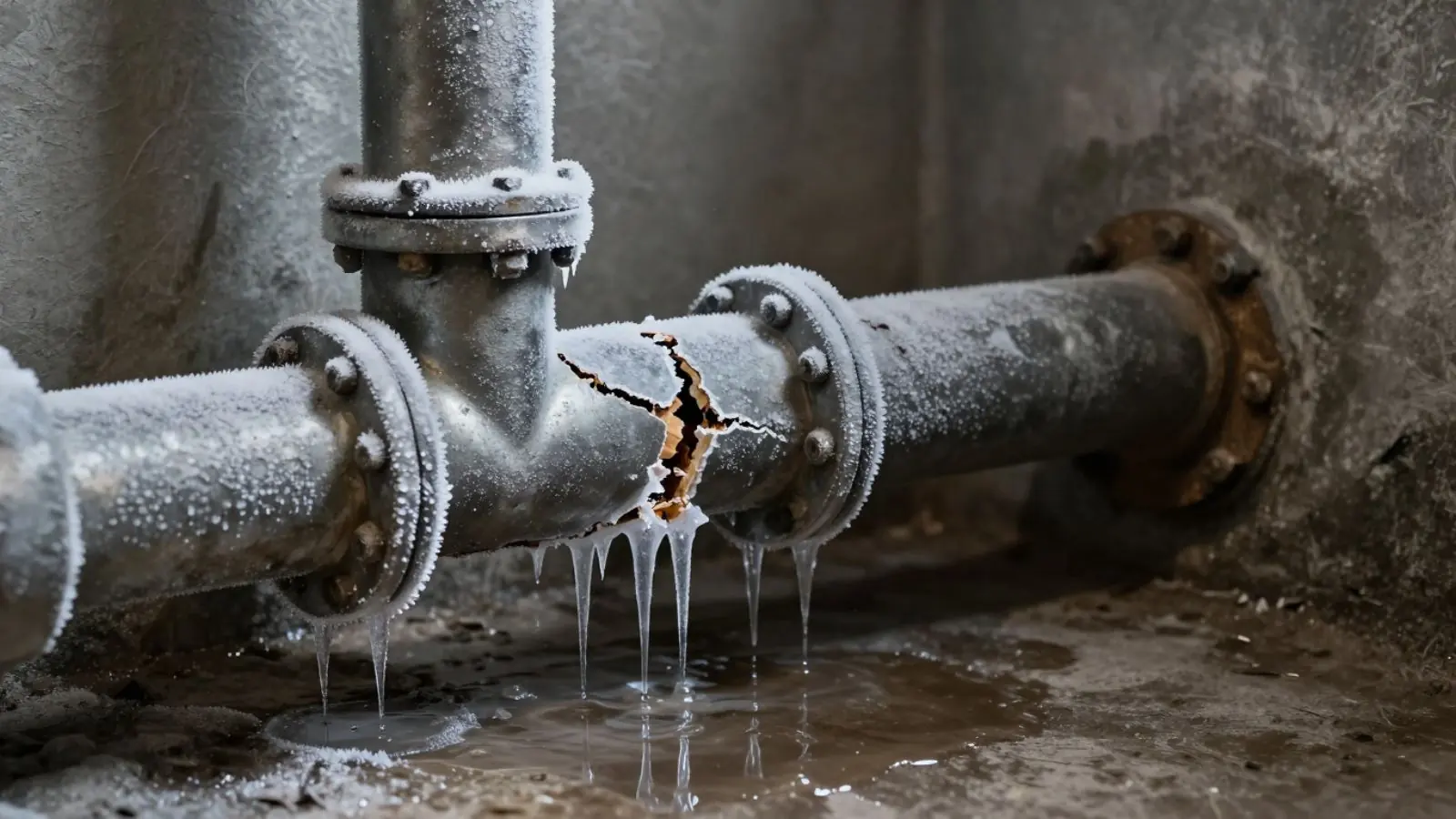
Water expands as it freezes, and the growing ice builds pressure between the blockage and the closed faucet. The pipe wall gives way at its weakest point, which is often a hairline crack along the pipe or a joint. The crack stays sealed by ice until the pipe warms.
That delay is why freeze losses feel sudden. A line in an exterior wall, a garage, an unheated utility room or an attic may let go at a hallway ceiling or a basement stair, far from where it froze. By the time a stain appears, the cavity behind it has usually been soaked for a while.
Cold Weather Rules That Apply In Temple Hills
WSSC Water, the utility serving Temple Hills, publishes a winter readiness brochure. It says the minimum temperature for meters and interior pipes is 55 degrees Fahrenheit from November 1 through April 1. A thermostat set far below that in a vacant or lightly used unit is a risk factor, not just a savings choice.
The Maryland State Data Center's 2020 Census tables count 3,470 occupied housing units in the Temple Hills census-designated place, and 2,335 of them are renter-occupied. For tenants, that makes quick written notice to the landlord part of the response, because the building's heat and the pipes in shared walls are often outside a tenant's control.
Pipe split behind a wall?
Shut the main valve, then call (301) 936-0619 and describe where the ice formed.
What You See After A Freeze
| What you notice | What it usually means | How urgent |
|---|---|---|
| Faucet runs slowly or not at all in cold weather | Ice may be forming in the supply line | Open the tap slightly and warm the area, then watch for a leak |
| Sound of running water behind a wall | A split pipe has thawed and is releasing water | Shut off the main now and call |
| Wet drywall or a bulging ceiling | Water has collected in the cavity above or behind it | Emergency, because drywall holds water |
| Frost or ice on a visible pipe | The pipe is at risk but may not have split yet | Warm the space and keep the tap dripping |
First-Hour Safety Steps For A Split Pipe
Frozen pipe safety
Close the main water valve, which WSSC says is usually in the basement or laundry room. Open the nearest cold or hot faucet to relieve pressure. Stay out of rooms with a sagging ceiling, and keep clear of outlets and the panel if water is near them.
If you must thaw a pipe that has not split, WSSC says to use a hand-held dryer and never a torch or open flame. If you cannot find the shut-off, or water is coming from the street side of the meter, call WSSC Water's emergency line at 301-206-4002.
Water running behind a wall?
Call (301) 936-0619 and tell the dispatcher which room is wet. The line is answered 24/7.
How We Dry A Freeze Loss
The crew starts by extracting standing water with portable extractors and wands. Moisture meters and a thermal camera then map where the water went, because a split behind a wall can wet insulation, studs and the ceiling below without a visible puddle.
Wet drywall and insulation are cut out where they cannot be dried, usually a flood cut a short way above the wet line. Air movers and low-grain dehumidifiers then run until readings return to normal. We plan the drying with the ANSI/IICRC S500 water damage restoration standard as a reference.
We do not repair the split pipe itself. A plumber does that, and we coordinate timing so the wall is not closed up before it is dry. For wider drying needs, see structural drying and dehumidification.
Thawed and now leaking?
Water often appears only after the thaw. Call (301) 936-0619 before the drywall soaks through.
Freeze losses vary because water travels. These factors set the size of the job.
- Where the pipe split. A line in an attic wets more floors than one in a basement.
- How long it ran. Water that ran for hours reaches farther than a quick shut-off.
- Materials soaked. Insulation and drywall are removed, while framing is usually dried.
- Rooms affected. Several ceilings and walls mean more equipment and more days.
- Access. Finished walls, tile and cabinets take longer to open and rebuild.
Call (301) 936-0619 and the scope and price for a frozen pipe job are laid out before work starts.
Insurance And Freeze Damage
A pipe that splits suddenly from freezing is generally treated as sudden water damage, while seepage over weeks is treated as maintenance. Some policies expect heat to have been maintained in the home. We take photos and moisture readings and write down what was removed, and your insurer decides coverage. For the general split between sudden and gradual loss, see water damage cleanup.
Mistakes That Make A Freeze Loss Worse
- Turning the water back on before the split is found and repaired.
- Using a torch, heat gun or space heater near wet material to thaw a pipe.
- Waiting to see whether a stain spreads before calling.
- Closing a wall with fresh drywall before the cavity reads dry.
- Leaving a vacant home or rental unit without heat and without anyone checking on it.
Crews also work freeze losses in Oxon Hill and Clinton, and the same dispatch line covers all of them.
Common Questions
Is emergency frozen pipe water damage restoration available in Temple Hills?
Yes. Calls are taken around the clock, including nights and holidays, and a crew goes out the same day when one is free. While you wait, shut off the main and keep clear of wet outlets.
Should I thaw a frozen pipe myself?
Only if it has not split and you have a hand-held dryer. WSSC says never to use a torch or open flame. If you see a crack, wet drywall or hear running water, leave it alone and shut off the main.
Why did the damage show up after the weather warmed up?
Ice holds a split closed. When it melts, the pipe releases water at full pressure into the wall. The damage often looks sudden even though the pipe cracked during the freeze.
Can a frozen pipe cause mold?
Yes, if wet drywall and insulation stay damp. The EPA advises drying water-damaged areas within 24 to 48 hours to prevent mold growth, so quick extraction and drying matter.
Who fixes the pipe, and who dries the house?
A plumber repairs or replaces the split section. Our crews extract water and dry the structure, and we coordinate so wall repairs wait until the cavity is dry.