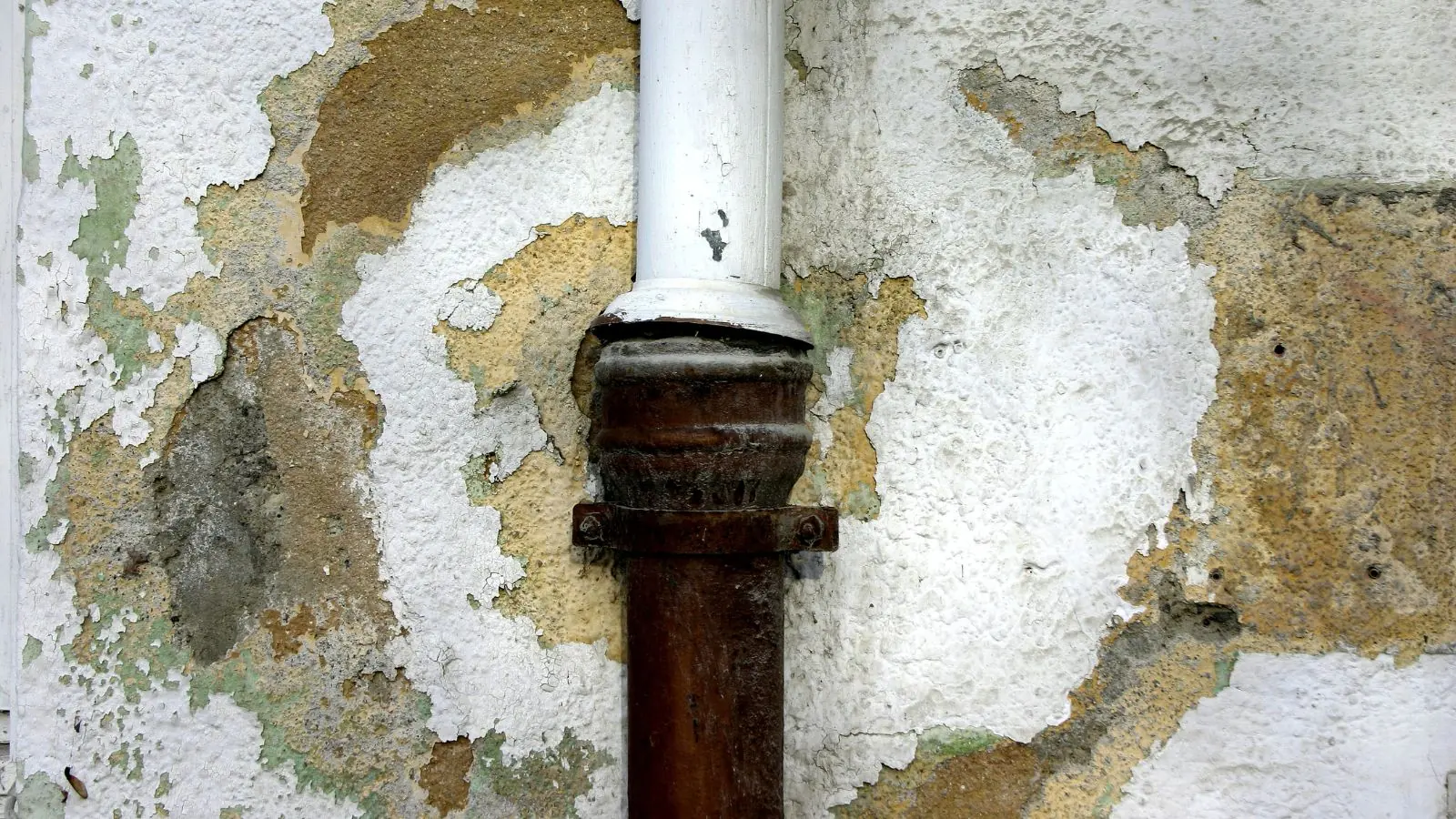
A wall that looks fine can be wet inside. Drywall wicks water up from the bottom edge, and insulation and framing behind it can stay damp long after the paint dries. If a wall is stained, bubbling, soft or smells musty, call (301) 936-0619. The line is answered 24/7.
What Water Does Inside A Wall
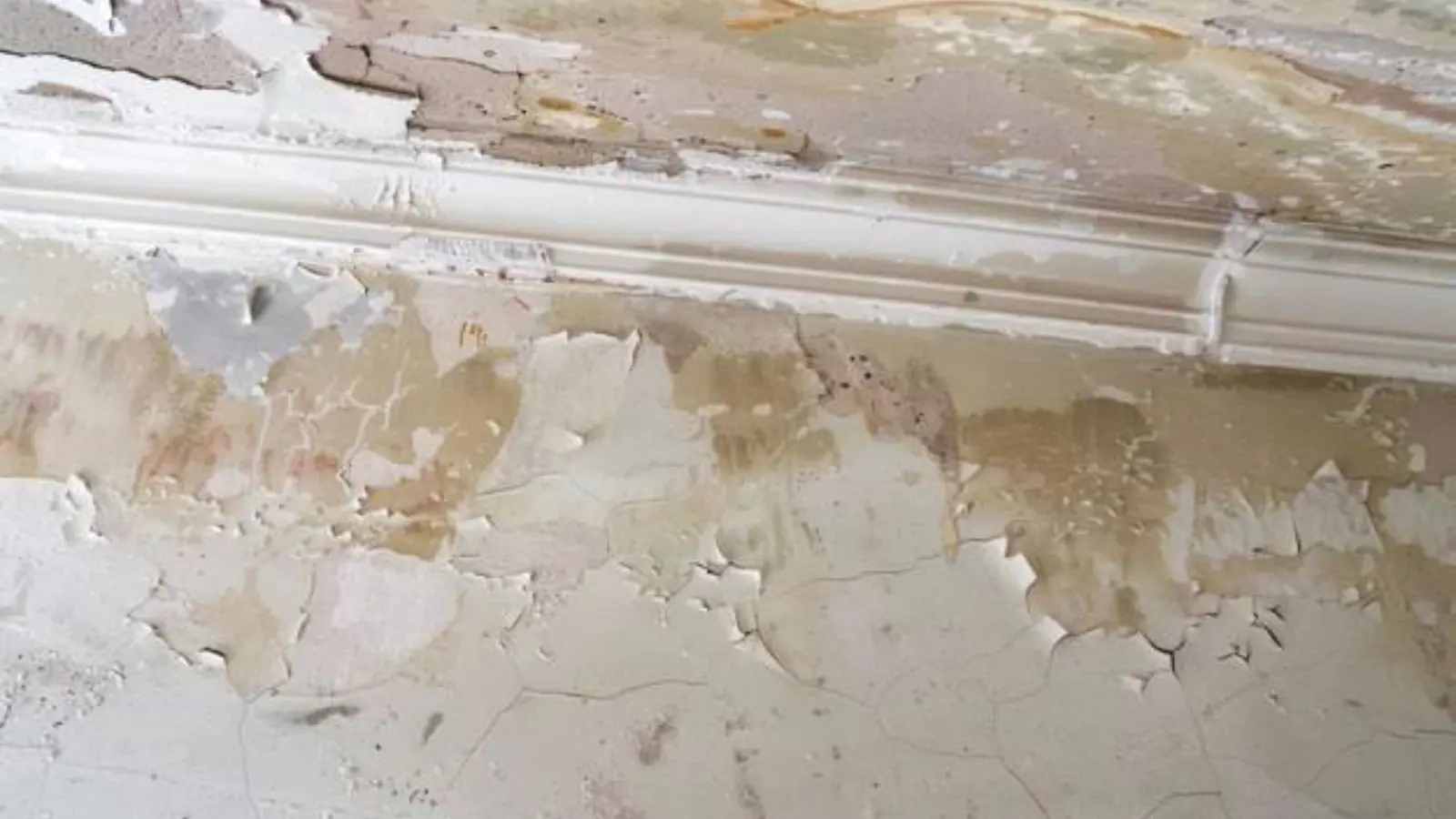
Drywall is gypsum between paper faces. Water breaks down the gypsum and feeds mold on the paper, and the damage often starts at the bottom of the wall and climbs. Insulation holds water against the studs, and the bottom plate and framing can stay wet.
Paint is a poor guide. A wall can look dry while the cavity still reads wet on a moisture meter, which is why repair starts with measurements, not appearances.
Sources Behind The Wall
Supply and drain pipes, window leaks, a roof leak that ran down inside the wall, appliance connections and an AC drain tube can all wet a wall. The wall is often the last place the water shows up. A stain two feet above the floor may mean water entered above it.
For leaks that started at the roof, see roof leak water damage cleanup. For plumbing sources, the plumber's repair comes first and wall repair follows.
Paint bubbling on a wall?
Call (301) 936-0619 and say how far up the wall the bubbling runs.
Local Notes: Permits And Mold Rules
Prince George's County's DPIE handles permits and inspections, so ask your contractor or call DPIE about whether your scope needs one. Small drywall patches generally do not, and larger structural work may.
A 2016 evaluation by the Maryland Department of Legislative Services reported that a 2008 law created a licensing requirement for mold remediation firms and that the program had never been funded or put into effect. The Maryland State Data Center's 2020 Census tables count 3,683 housing units in Temple Hills, with 213 vacant, and a leaking wall in an empty unit can run for weeks. A written scope from any contractor you hire is the sensible safeguard.
| Wall sign | What it usually means | What happens next |
|---|---|---|
| Bubbling or peeling paint | Moisture behind the paint | Moisture check, then dry or cut |
| Soft or crumbling drywall | Gypsum is breaking down | Cut out and replace |
| Brown stain with a ring | Repeated wetting | Find the source, then repair |
| Musty smell with no visible stain | Wet cavity or insulation | Moisture mapping and a small inspection hole |
First-Hour Safety Steps
Wet wall safety
Shut off the water if a pipe is the source. Do not cut into a wall that may contain wiring, and do not touch outlets or switches on a wet wall. Turn off the breaker for that circuit if the wall is dripping.
If drywall is sagging or bulging, keep clear of it because it can fall. Take photographs and mark the edge of the stain with a pencil so we can see whether it grows.
Wall wet or stained?
Call (301) 936-0619 and tell the dispatcher where the stain is and whether it is growing.
How We Dry And Repair The Wall
The crew maps the wall with moisture meters and a thermal camera, then removes wet insulation and drywall at the damaged section, usually cutting a straight line above the wet edge. Air movers and dehumidifiers dry the framing, and readings are taken until the studs are at normal levels.
Repair follows only when the cavity is dry. New insulation and drywall are installed, taped and finished, and the wall is primed and painted to match. We use the ANSI/IICRC S500 standard as a reference for the drying work, and the EPA advises drying water-damaged areas within 24 to 48 hours to prevent mold growth.
Broader repairs to flooring, ceilings and trim are described under water damage repair.
Wall soft at the bottom edge?
Soft drywall usually has wet insulation behind it. Call (301) 936-0619 to plan the cut.
Wall repairs range from a patch to several rooms. These factors drive the cost.
- Wet height and length. A two-foot cut is smaller than a full wall.
- Insulation. Wet insulation must be removed and replaced.
- Framing moisture. Studs that stay wet extend drying.
- Finish. Texture, paint and trim matching add work.
- Source repair. A plumber or roofer addresses the cause separately.
Wall jobs range from a patch to a room, so call (301) 936-0619 for scope and price in advance.
Insurance And Wall Damage
Policies often cover sudden water damage and exclude long-term seepage. The timeline of a stain matters, so take dated photographs. We document readings, what was removed and the repair steps, and your insurer decides coverage.
Mistakes To Avoid
- Painting over a stain before the cavity reads dry.
- Closing the wall with new drywall to hide the damage.
- Using bleach on a large moldy area.
- Repairing the surface without fixing the source.
Wall repairs in Clinton and Oxon Hill are handled by the same crews.
Common Questions
Is emergency wall and drywall water damage service available in Temple Hills?
Someone takes the call at any hour, and a crew can open and dry a wall the same day when one is free. Shut off the water if a pipe is the source and keep clear of sagging drywall.
Can wet drywall be dried without cutting it out?
Sometimes, if the water was clean and the wall was caught quickly. Soft, crumbling or stained drywall is usually removed.
Why is insulation removed from a wet wall?
It holds water against the framing and dries slowly. Replacing it speeds drying.
Will paint hide a water stain?
Only for a while. Stain blockers help on a dry wall, and the stain returns if the cavity is still wet.